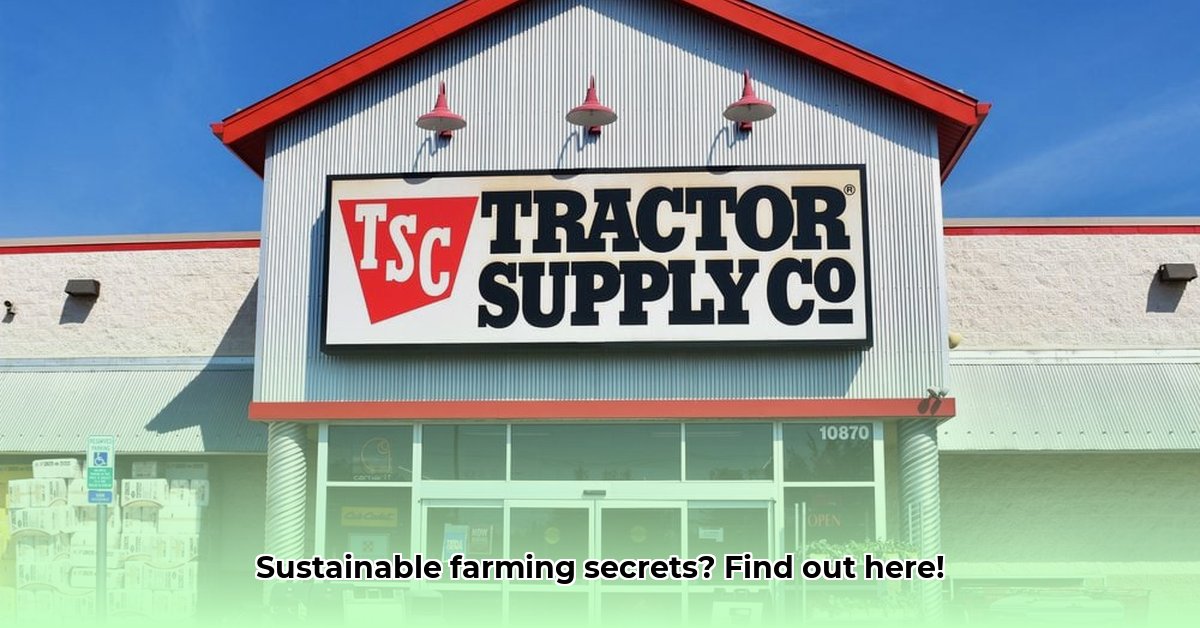
Tractor Supply Black Mountain NC: A Deep Dive into Sustainable Practices
Tractor Supply Company (TSC) in Black Mountain, North Carolina, serves as a critical resource for local farmers. Its convenient location and broad product range suggest a significant influence on agricultural practices in the region. However, a critical examination reveals a substantial gap in readily available data regarding the store's support for sustainable farming. For comparison, see data on a similar store in Mount Airy. This investigation explores TSC's impact, highlighting the need for further research to fully understand its role in fostering or hindering environmentally conscious agriculture.
Assessing TSC's Current Inventory: A Data Deficiency
Initial research revealed a surprising lack of readily accessible detailed information about the Black Mountain TSC store's inventory. While general product categories are listed on the company website, specific details regarding sustainable options—such as the availability of organic fertilizers, water-efficient irrigation systems, or compostable mulches—are scarce. This information deficit makes it challenging to assess the store's true contribution to promoting environmentally responsible agricultural practices in the region. How can local farmers effectively adopt sustainable methods without clear information on the availability of necessary supplies? This opaqueness hinders informed decision-making for sustainable agriculture.
The Sustainability Gap: Unveiling the Missing Pieces
This significant data gap severely limits a comprehensive analysis of TSC's impact. To fully understand the situation, we need more than just broad statements; we need concrete data. A visual representation, such as a map illustrating the store's service area and the locations of nearby farms, would provide valuable context. Furthermore, photographic documentation of the store's shelves would offer a direct glimpse into the actual products available. Without this detailed information, any assessment of TSC's role in sustainable agriculture remains incomplete and unreliable. Are local farmers finding the sustainable products they need, or are they left to navigate a landscape of unclear and potentially unsustainable options? The answer currently remains elusive.
Stakeholder Perspectives: A Tapestry of Opinions
A broader perspective is needed to understand TSC's influence. This requires input from multiple stakeholders, including:
- Local Farmers: Their firsthand experiences purchasing supplies are crucial in understanding the practicality and availability of sustainable options. Do they find the store supportive of their efforts, or do they feel it falls short?
- Environmental NGOs: These organizations offer an independent perspective on TSC's practices and potential impact on the environment. Do they perceive the store as a partner in promoting sustainability, or do they identify areas needing improvement?
- Local Government: Their insights into relevant policies and initiatives concerning sustainable agriculture provide important context. Are there existing partnerships or programs that TSC could leverage to promote sustainable practices?
- Tractor Supply Company: Public statements or internal policies concerning sustainability initiatives would be valuable. What is TSC's official stance on supporting sustainable agriculture?
Gathering these diverse perspectives will offer a balanced and nuanced understanding of TSC's contribution to sustainable farming in Black Mountain.
The Path Forward: Research Recommendations
To effectively assess TSC's role, and ultimately support the adoption of sustainable agricultural methods, further research is essential. The following steps are crucial:
- Comprehensive Inventory Audit: A detailed inventory of all products in the Black Mountain TSC store, categorized to highlight those meeting sustainability standards, is necessary. This will provide concrete evidence of the availability of sustainable options.
- Farmer Surveys: Extensive surveys of local farmers should gather data on their experiences sourcing sustainable supplies, revealing the actual availability and accessibility of such items.
- Competitor Benchmarking: A comparison of TSC's offerings with other agricultural supply stores in the region will reveal how well TSC stacks up against the competition regarding sustainable product offerings.
- Supply Chain Transparency: Further research into the origins and sourcing of TSC's products will offer insight into their environmental impact throughout the supply chain.
This multi-faceted approach will allow for a much more comprehensive evaluation of TSC's impact on sustainable agricultural practices.
Conclusion: A Call for Transparency and Action
This investigation highlights the critical need for greater transparency in the agricultural supply chain. The current lack of readily accessible data on Tractor Supply's product offerings significantly hinders efforts to promote sustainable farming practices in Black Mountain. Further research, encompassing the recommendations outlined above, is essential to fully understand their influence and work towards a more sustainable future for local farmers. Only through collaborative efforts and a commitment to transparency can we ensure that our agricultural communities thrive while safeguarding our environment.